Magnus Walker, RM Sotheby’s, and the Auctioning of an Idea
The upcoming RM Sotheby’s sale of Magnus Walker’s Outlaw Collection is more than a collector car auction. It is a public test of how much the market truly values personality, provenance, and the cultural impact of one of Porsche’s most recognizable modern figures.
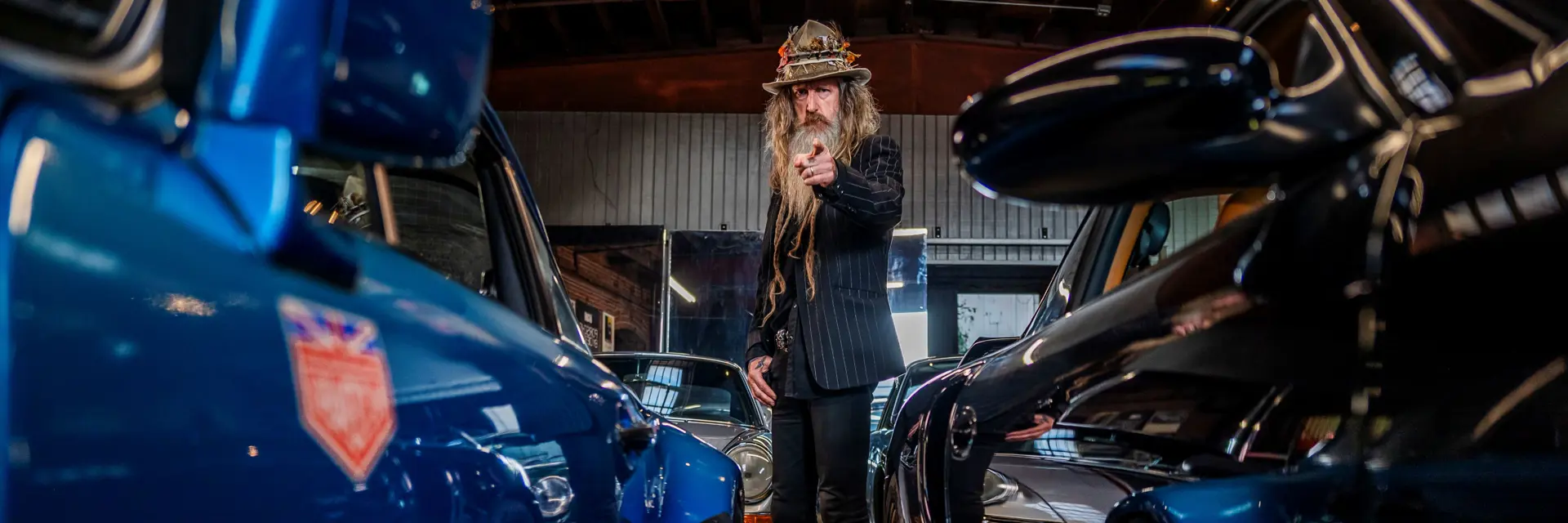
The Sale of a Worldview
There are car auctions, and then there are cultural moments disguised as car auctions.
The upcoming RM Sotheby’s sale of Magnus Walker’s Outlaw Collection belongs firmly in the second category. On paper, it is a multi-lot online auction featuring nearly two decades of collecting, including 18 cars and a deep bench of memorabilia, parts, and workshop artifacts. In practice, it is something far more revealing.
It is the public sale of a worldview.
Magnus Walker was never compelling in the conventional collector sense. He did not build his reputation on perfect restorations, climate-controlled preservation, or concours-correct restraint. He built it on instinct. On silhouette. On the idea that an early 911 should feel alive rather than embalmed.
Long before the word “outlaw” became overused in marketing decks and social captions, Walker was already living it. He lowered early 911s just enough. Chose wheels with attitude but not parody. Mixed patina with intention. Photographed them in Los Angeles light that made them look less like museum pieces and more like co-conspirators.
That distinction is critical.
Because this auction is not simply about metal. It is about the translation of taste into value.
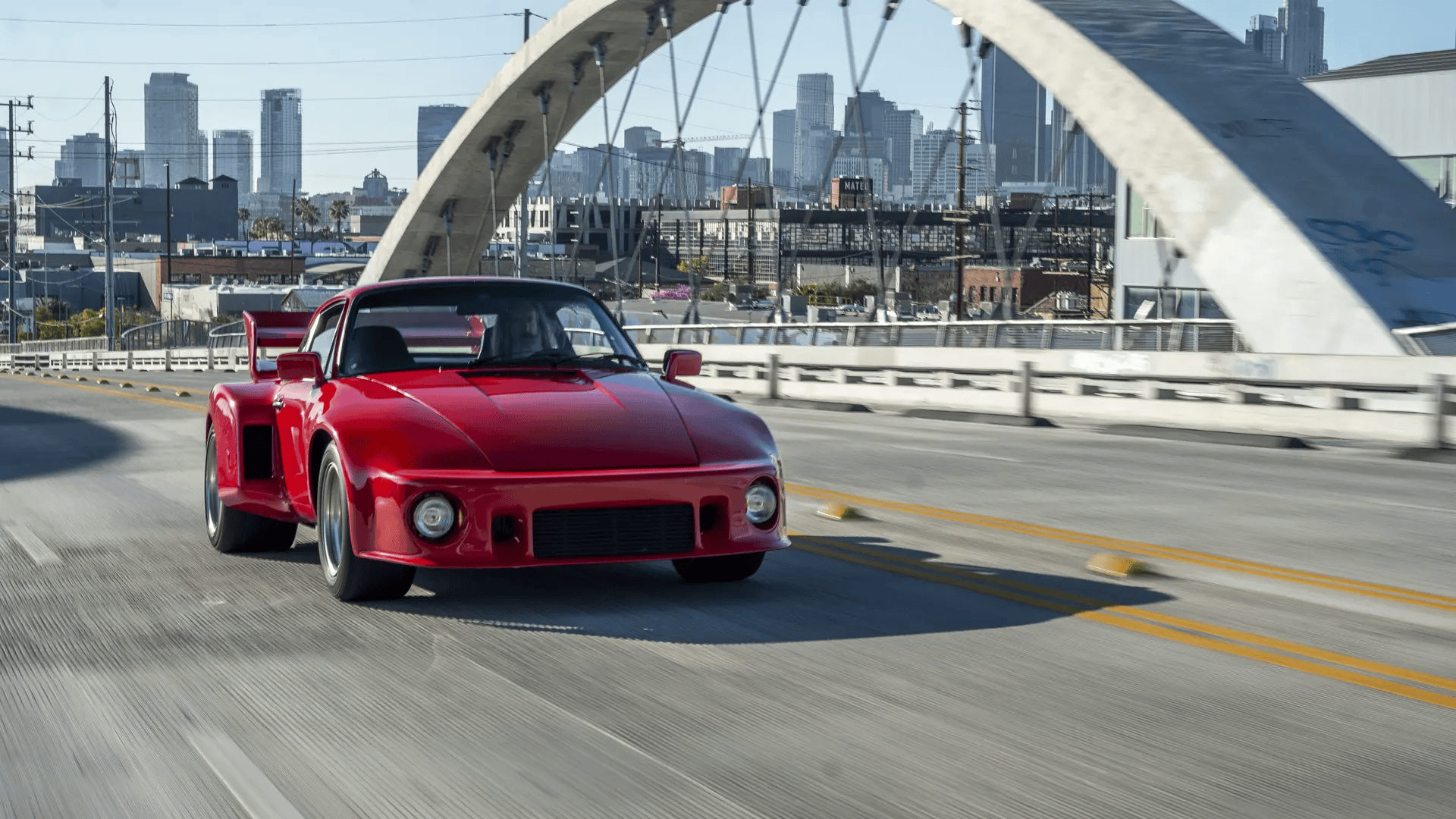
The Foundational Cars
At the center of the sale are the early short-wheelbase 911s that formed Walker’s public identity.
These are not anonymous early-production cars presented in sterile factory specification. They are interpretations. Cars that reflect a very specific understanding of what a 911 should be: compact, slightly aggressive, intimate in scale, and unmistakably analog.
An early 1965 911 in the collection reads almost like an origin story cast in steel. Short wheelbase. Delicate proportions. The pure, narrow-hipped stance that defined the model before flares and wings complicated the silhouette. In Walker’s hands, cars like this were not softened. They were sharpened. Given presence without excess. The visual equivalent of a well-cut jacket worn with boots instead of dress shoes.
The 1967 911 S offered in the sale further reinforces the philosophy. A genuine early S, numbers-matching at heart but tuned, adjusted, interpreted. Tartan seat inserts. Correctly judged ride height. Wheels that feel intentional rather than trendy. The car is not diminished by modification. It is animated by it.
And that tension is where the entire auction lives.
Beyond the Outlaw Label
The sale is not limited to early cars. There are Turbos. There are later GT models. There is breadth.
A 1970s-era 911 Turbo carries with it the blunt-force mythology of the original boosted Porsche experience. Wide hips. Lag. Drama. The kind of car that feels like it might still surprise you, even decades later. A 2000s-era GT model, by contrast, represents Porsche at its most surgically precise. Motorsport engineering filtered for the road.
That range matters.
It suggests that this was never a one-note collection built solely around image. It was appetite-driven. The common thread is not model year or configuration. It is intensity.
Walker gravitated toward cars with edges. Cars that felt mechanical in a way modern performance often does not. Cars that asked something of their driver.
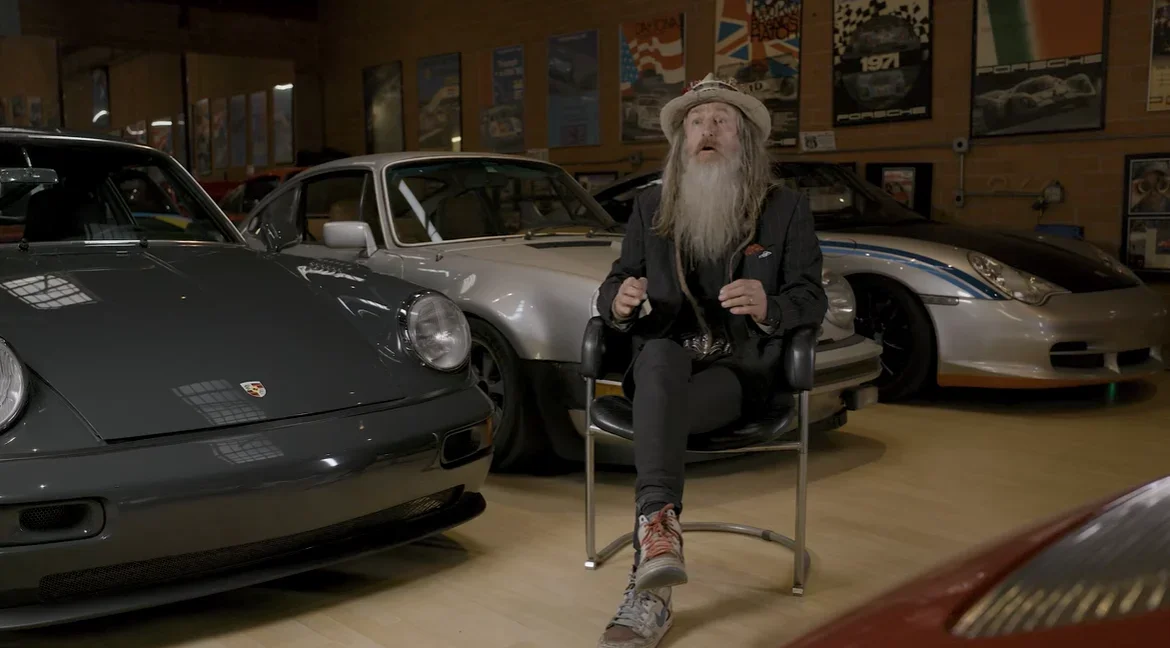
Pricing Personality
The real question surrounding this auction is not which lot will bring the highest hammer price.
It is whether the market will pay a premium for personality.
The collector world has grown increasingly financialized in recent years. Blue-chip Ferraris trade like modern art. Limited hypercars behave like structured assets. Provenance is quantified. Mileage is scrutinized. Paint codes are debated with the seriousness of legal arguments.
Against that backdrop, the Magnus Walker sale feels almost philosophical.
Can individuality still command meaningful money?
Not just rarity. Not just factory documentation. Not just untouched preservation. But visible, intentional, culturally influential taste.
Walker did not invent enthusiasm for early 911s. What he did was reinterpret it for a broader audience. He helped detach the 911 from a purely club-centric identity and placed it in a more urban, less formal context. Under freeway overpasses. In warehouse districts. On canyon roads at odd hours.
He made the car feel wearable.
That shift mattered. It invited a younger generation into Porsche culture without asking them to memorize rulebooks first. It suggested that reverence and reinterpretation were not mutually exclusive.
Now that reinterpretation is being assigned lot numbers.
The Memorabilia and the Residue of Obsession
If the cars form the spine of the sale, the memorabilia may form its emotional core.
Books with worn corners. Wheels stacked in a workshop. Model cars accumulated not as decoration but as reference. Parts kept because they might matter later. These objects are not blue-chip in the traditional sense. They are residue.
They represent a life arranged around a singular mechanical shape.
And that is what makes this sale compelling beyond its estimates. It is not just the dispersal of valuable machinery. It is the disassembly of a curated environment.
Collectors often speak about buying cars. Far fewer speak honestly about the ecosystem that grows around those cars. The shelves. The spare parts. The notebooks. The things that make the space feel lived-in rather than staged.
This auction includes all of it.
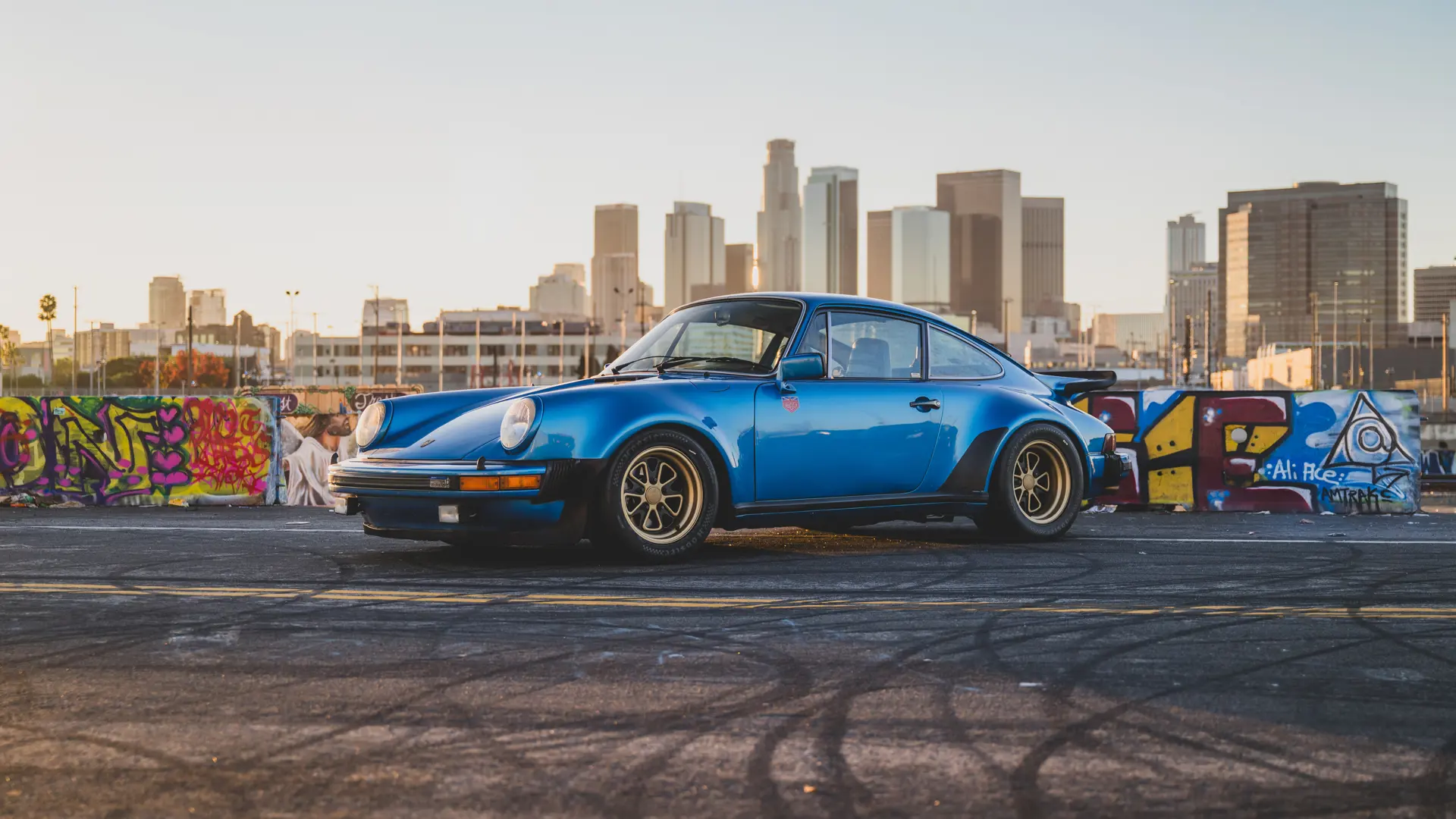
Los Angeles Under Auction Lighting
There is something unmistakably Los Angeles about this moment.
Walker’s identity and the city have long mirrored each other. Slightly improvised. Highly visual. Resistant to excessive conformity. Capable of turning surface into substance when the chemistry is right.
His 911s always looked as though they belonged in the industrial edges of downtown, on Mulholland at dusk, or idling outside a warehouse show long before Porsche culture became algorithm-friendly.
To see that aesthetic pass through RM Sotheby’s, with all the global polish and institutional gravitas that implies, creates a fascinating contrast.
Outlaw taste under auction-house lighting.
Warehouse instinct in a blue-chip framework.
It is a collision of subculture and establishment, and it feels entirely appropriate.
What This Auction Really Represents
The strongest cars will likely perform well. The market still rewards clarity and charisma when they appear in authentic form.
But the real significance of this sale is less about the hammer and more about the message.
If bidders respond enthusiastically, it will affirm that the collector world still understands narrative. That it can distinguish between trend and influence. That it is capable of valuing a collection built on instinct as much as one built on investment strategy.
Because what is really being offered here is not just early 911s, Turbos, or GT cars.
It is a chapter in modern Porsche culture.
A reminder that collecting can be expressive rather than antiseptic.
That taste can ripple outward.
That one person’s point of view, consistently applied, can reshape how an entire generation sees a car.
And if the market prices that properly, it will say something meaningful about where enthusiast culture stands right now.
Not just what it buys.
But what it believes in.
